
Challenge
We needed to validate and launch a business version of our travel booking platform while accounting for limited tech capacity and budget. A closed beta, open beta, and finally a public launch for millions of front and back book customers presented broad challenges including:
Driving opt-ins for beta tests with current users
Communicating the purpose and value of new product features
Addressing complex user roles and onboarding flows
Results
I led content design from day 1, meeting with partners weekly and influencing intent for every aspect of the work.
Rapid iteration and thoughtful use of our research budget inspired adoption well beyond expectations. Strong positive feedback from customers and leadership paved the way for a full launch that permanently tied business card customers to this new travel platform.
Driving Adoption
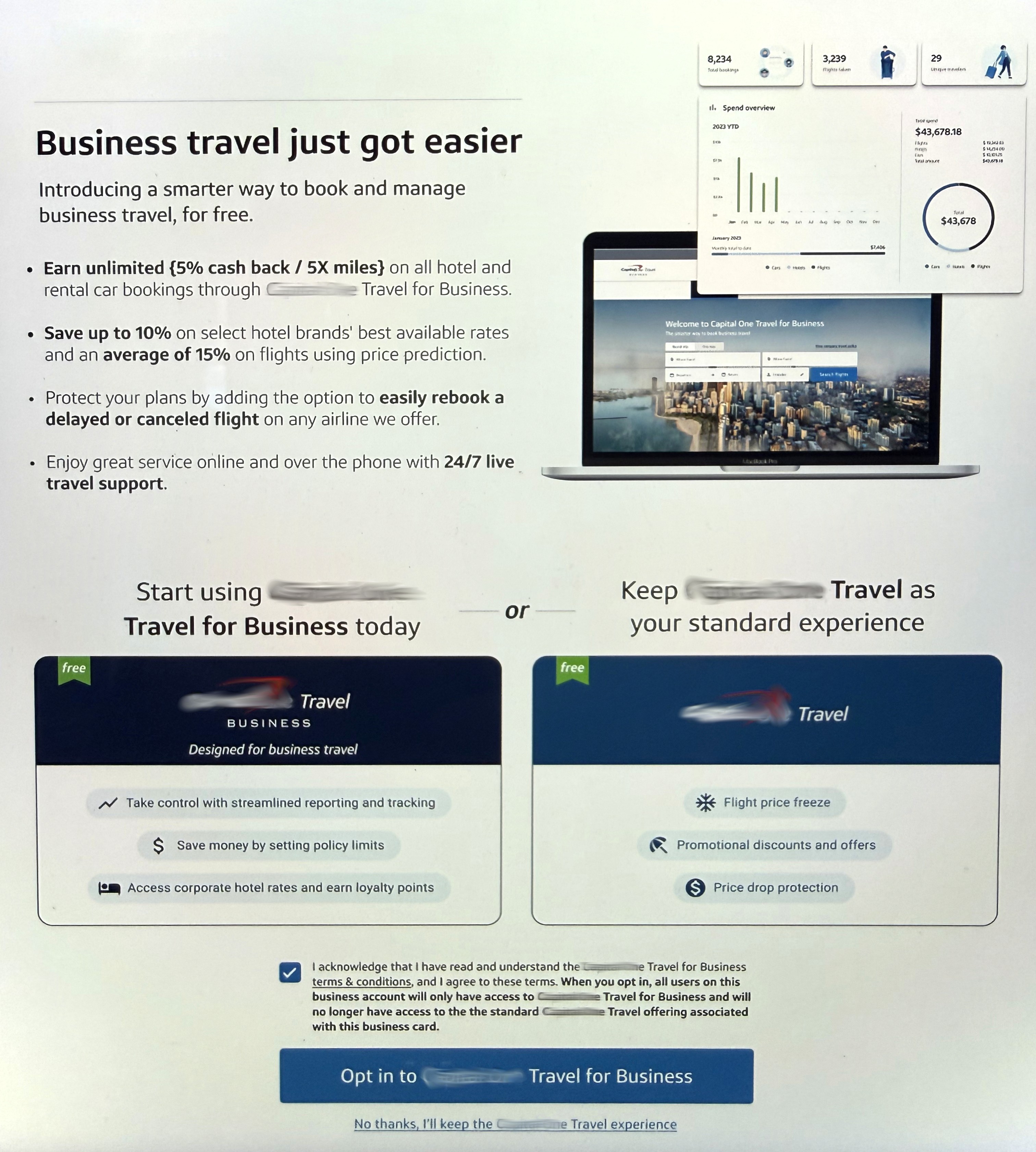
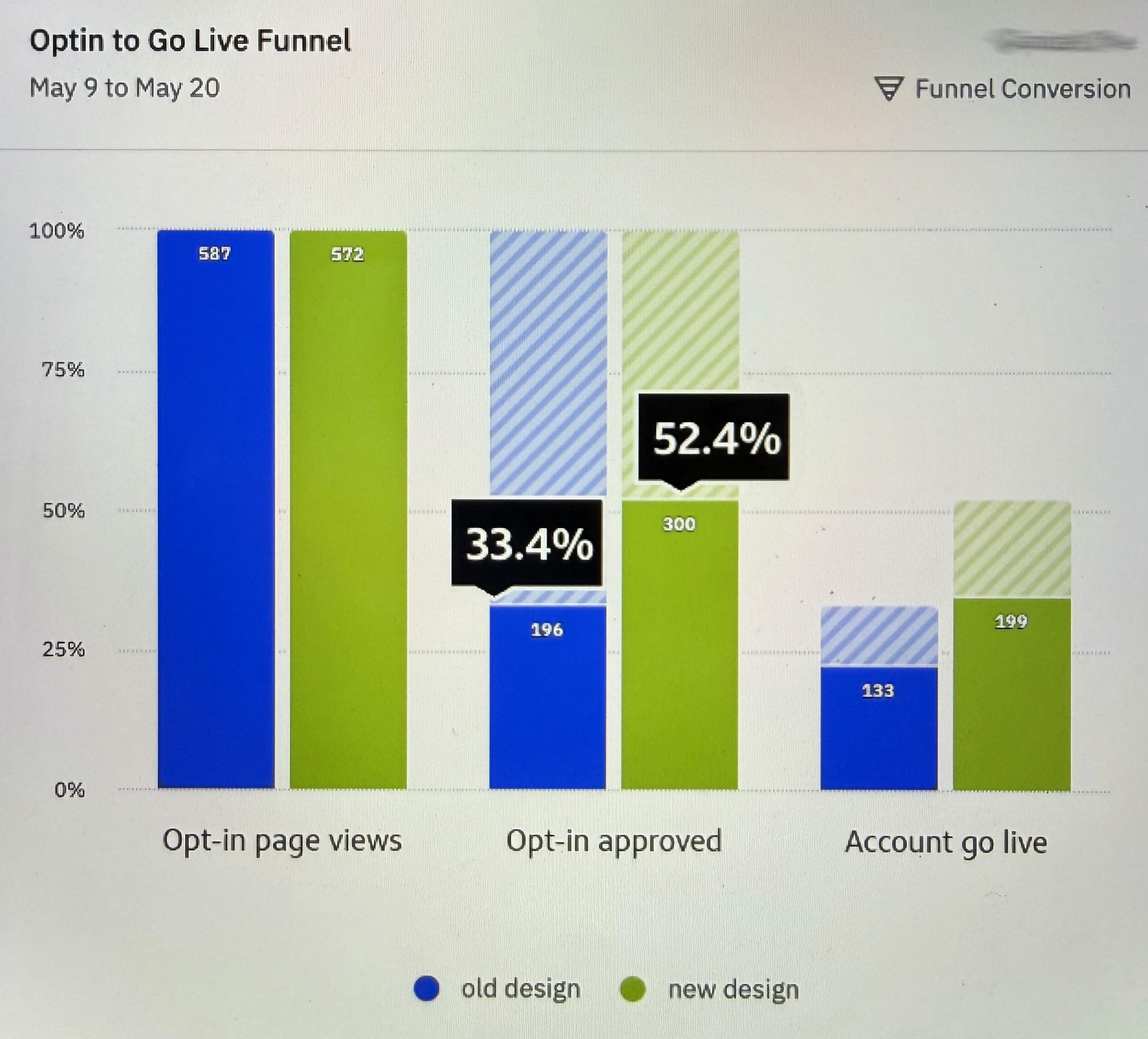
Our initial opt-in experience for the open beta prioritized simplicity. My hypothesis was that users wouldn’t want to read a lot of content. It performed above expectations with a 33% conversion rate, but I knew we could do better and wanted to iterate.
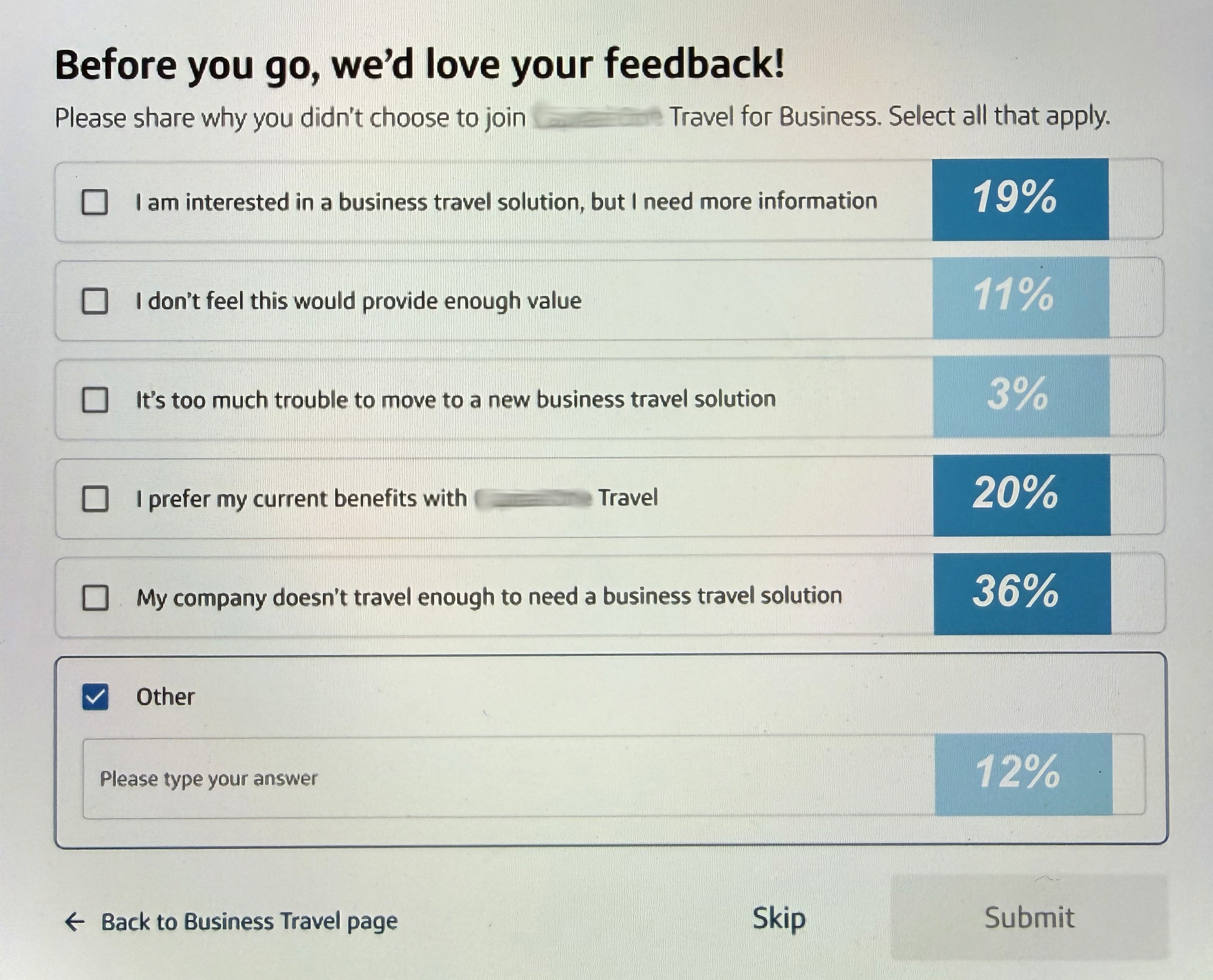
I included a simple survey for users opting out to gather context for their decision. It showed potential for converting 19%+ users by including more information to drive confidence, and I used this to justify my recommendations for an A/B test.
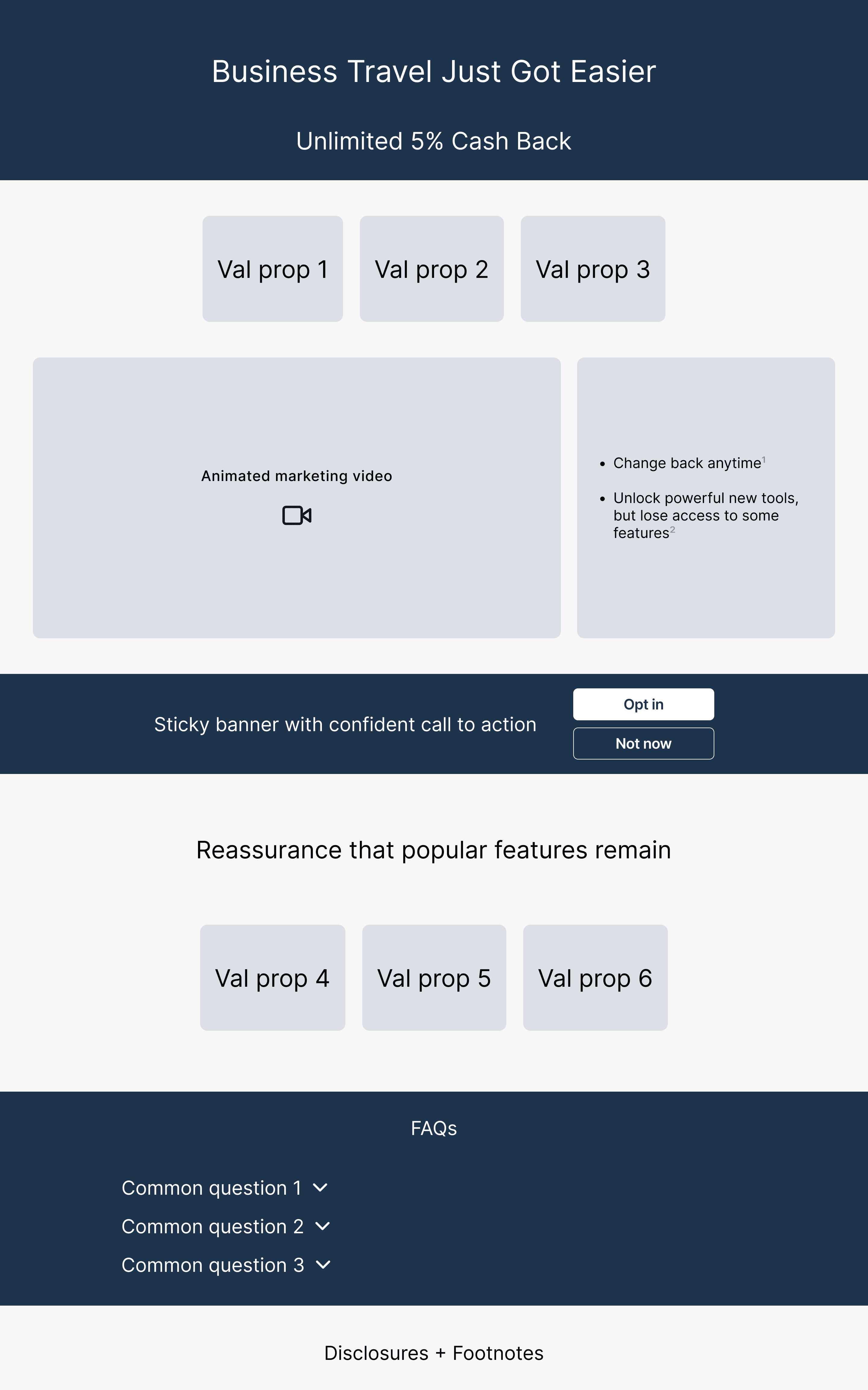
I created wireframes for focused discussions on specific content recommendations:
Elevated primary benefit (5% cash back)
Positive reframing of changes from their current travel product and legal disclosure language moved to anchored footnotes
Sticky CTA following users to remove friction when they’re committed
Supplemental details and FAQs below the fold for those needing more confidence
The updated design saw massive success:
52.4% conversion rate = 53% higher performance than the old design.
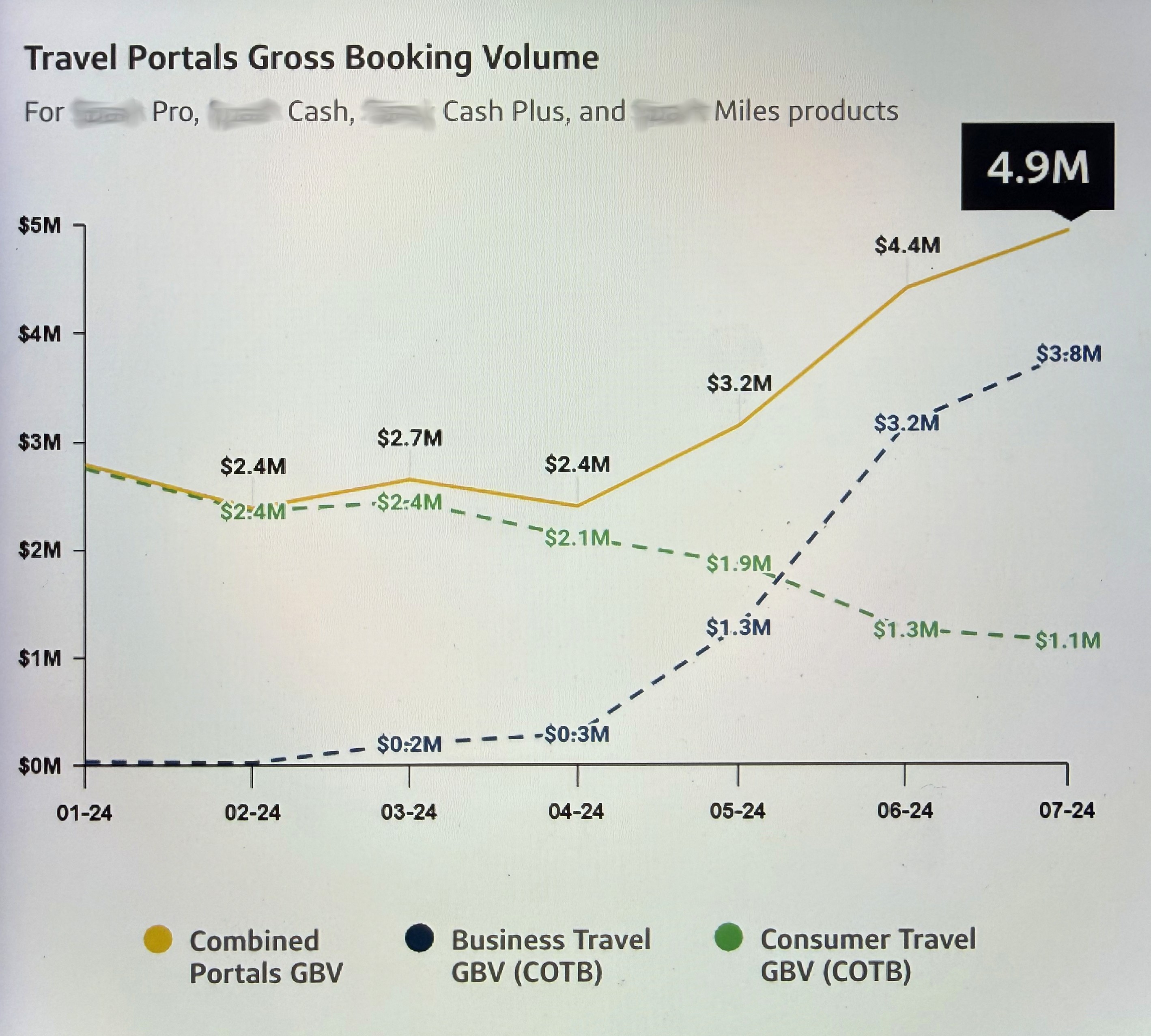
Users spend 2X more on travel than they did prior to launch.
Onboarding
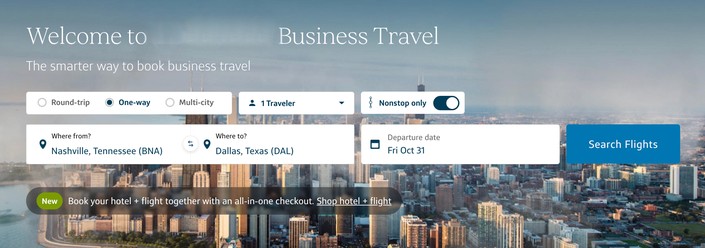
Users typically want to jump in and explore new products—not read manuals. I made the case that back book customers switching to this new travel platform may already have a booking in mind, so removing friction was even more important for those users.
My design partner initially recommended a lengthy setup flow at sign-in, but I redirected our approach to an elective entry-point on the home screen.
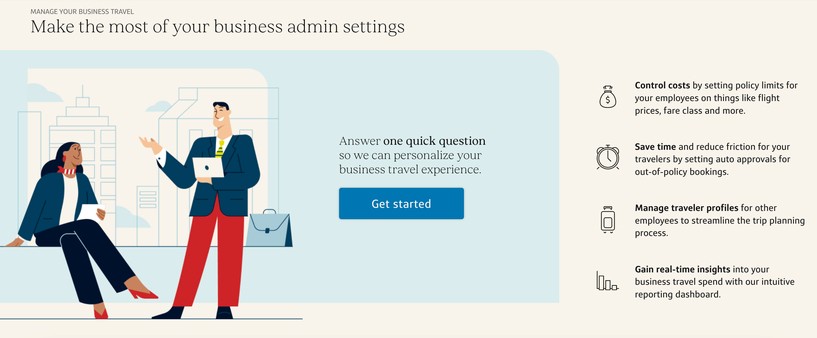
"One quick question" asks users how their business typically books and manages travel. Answers determine recommended next steps where each user is provided a templated walkthrough identifying relevant features and settings.
My copy increased setup completion rates by over 50% (to 63% total) by:
Starting with "one quick question" to make taking action easy
Emphasizing the benefits like saving time and money, while substantiating the claims with relevant features
Using a pull instead of push approach to respect users’ agency
User Roles
There are four user roles in this product, each with complex and unique capabilities. My product partner’s initial guidance labeled users as a specific "type" (e.g., Admin, Booker, Non-Financial User, etc.)
Arbitrary labels can leave room for misinterpretation and confusion—especially when considering similar, but separate, user labels on the business credit card account in their banking app.
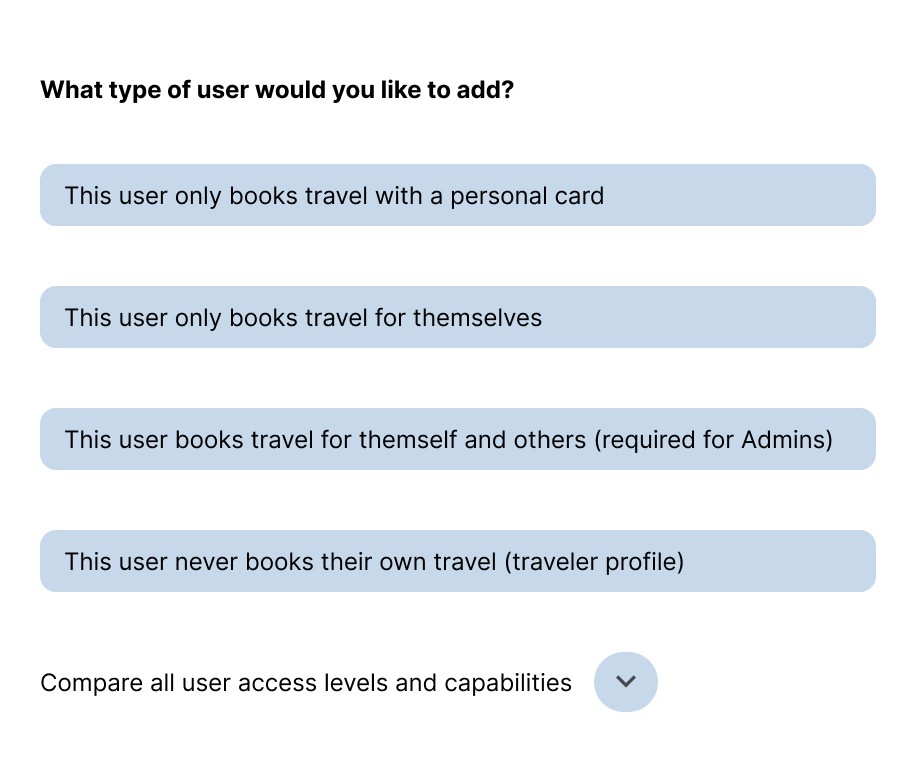
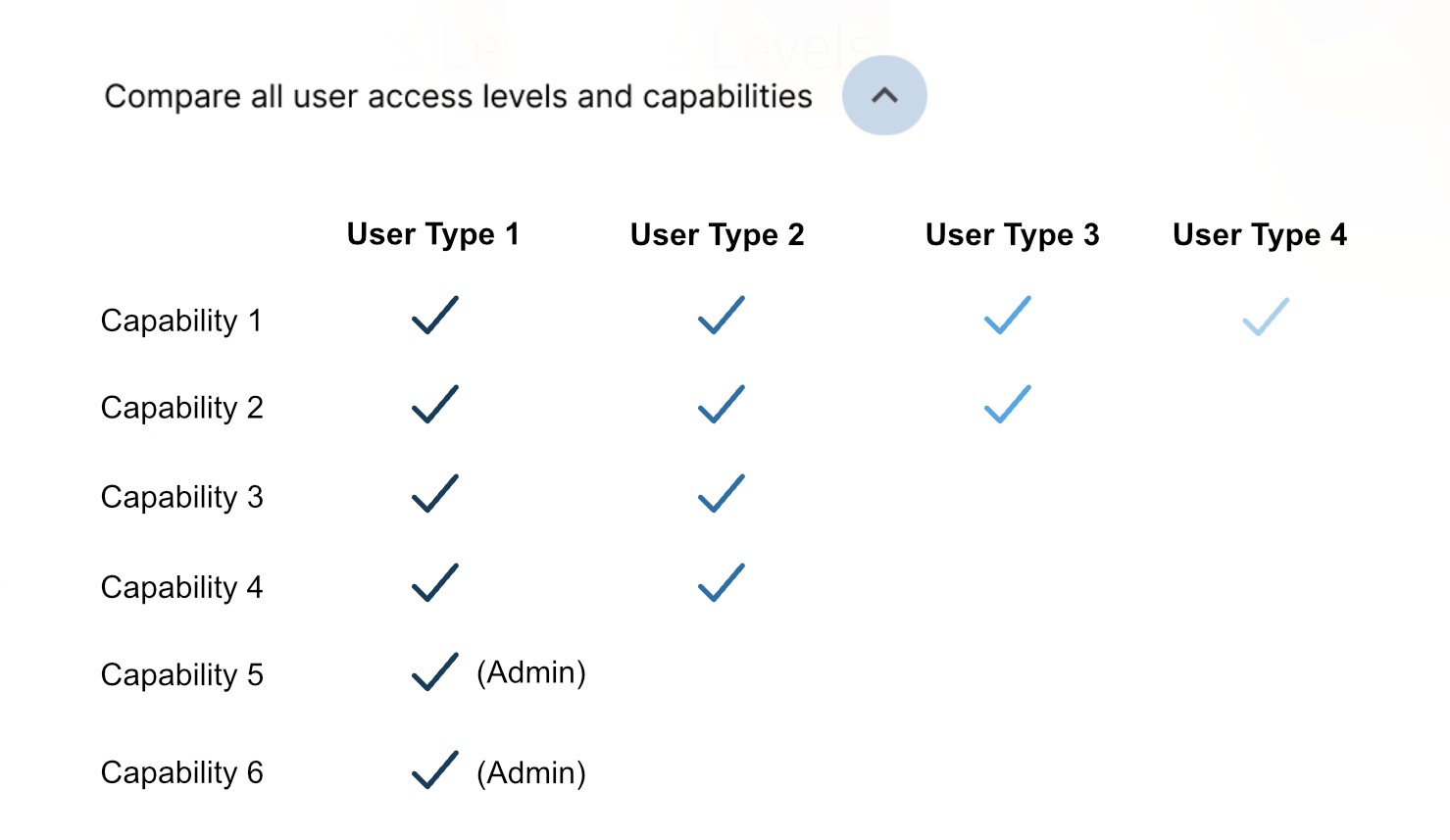
I recommended framing user roles around their capabilities, which simplified decision making. Paired with a helpful matrix comparing detailed access levels for each role, I gave customers confidence and reduced friction.
For complex business decisions, as with the opt-in page above, more information can be beneficial.
Learn more about this work.